
When Small Teams Start Thinking Bigger

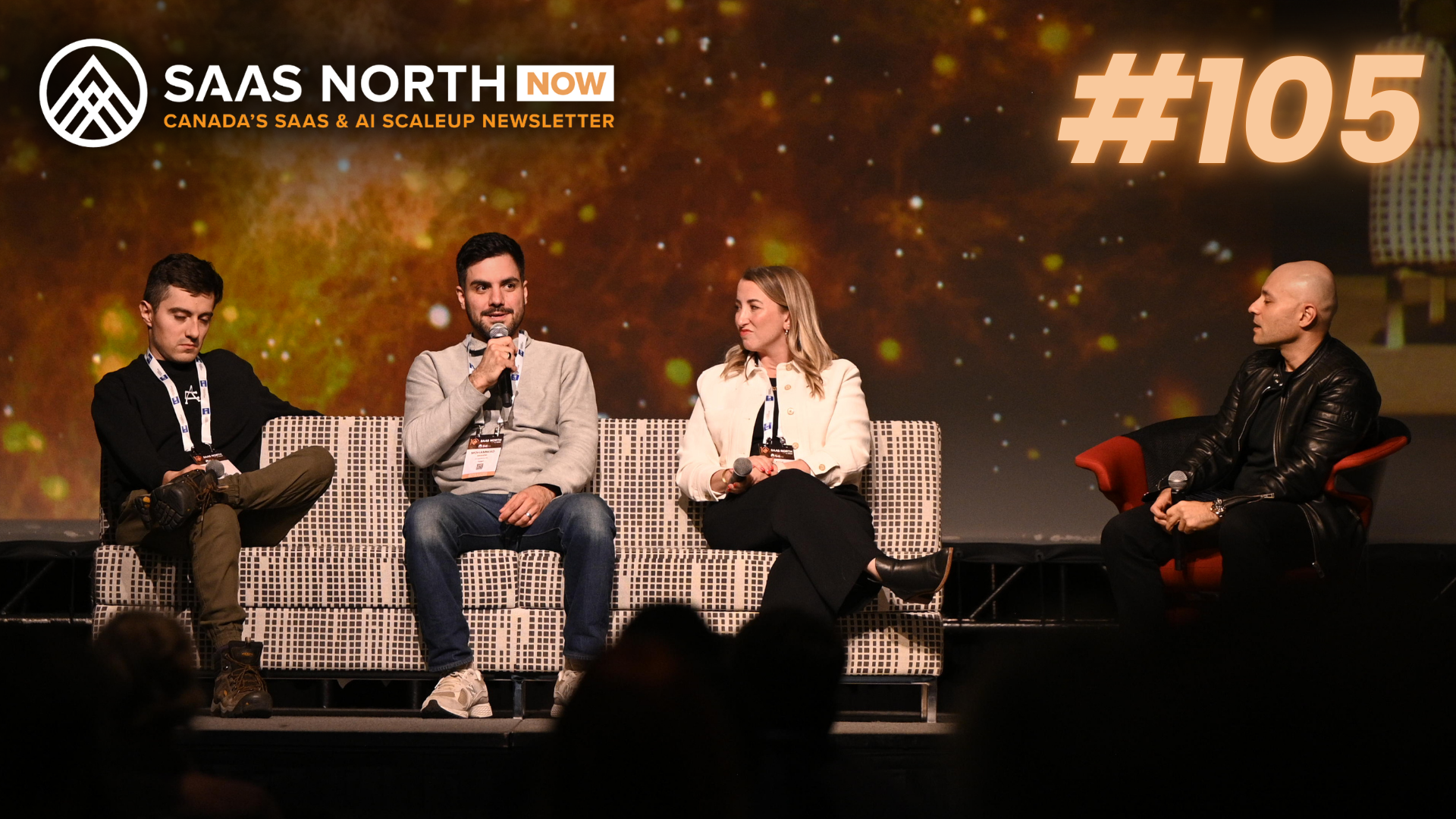
Aydin Mirzaee (Fellow.ai), Alexis MacDonald (Klue), Mohammad Hashemi (Gadget), & Felipe Izquierdo (Quest)

SAAS NORTH NOW #105

Hello to Canada’s SaaS and AI Community,

Across startups, a simple question keeps coming up: how much of this work still needs a human?

Recent shifts, including tools like Claude Code, have accelerated what small teams can realistically build and automate, changing expectations across roles and workflows.

That reality was front and centre at SAAS NORTH during Work Rewired: Building Lean, AI-First Teams, a candid conversation moderated by Aydin Mirzaee, CEO and co-founder of Fellow.ai. He was joined by Alexis MacDonald, Mohammad Hashemi, and Felipe Izquierdo.

Rather than theory, the session focused on what actually changes inside companies once AI becomes unavoidable.

Key takeaways:

  • Lean teams are becoming a deliberate operating choice.
  • AI proficiency is now expected, not optional.
  • Hiring is shifting toward fewer, more capable operators.
  • Some teams are building internal tools instead of buying them.
  • SaaS products are increasingly judged by outcomes, not interfaces.

Dave Tyldesley

Co-Founder/Producer, SAAS NORTH Conference Editor, SAAS NORTH NOW

Apply to Intellectual Property Ontario (IPON) to access trusted IP education, funding, coaching and more.

What followed were real decisions made under real pressure, shared without polish or spin. The kind of choices that quietly reshape teams long before they show up in org charts or metrics.

A Company That Chose To Get Smaller

For Alexis MacDonald, the conversation began with a decision most leaders avoid discussing publicly. Earlier this year, her company reduced its workforce by half.

“We cut the company in half over the course of June,” she said. “The rationale for that decision was really around how do we accelerate and how do we get back to our roots of being a startup that moves really, really quickly.”

The move was intentional and transparent. Employees were told it was coming and  people were given the opportunity to raise their hand. The goal was speed, not just savings.

After the change, something unexpected happened. A much smaller SDR team generated more pipeline in a single quarter than the previous two quarters combined.

Tasks that once required headcount had been automated.

“When you have more people to do the work, you rely on people,” Alexis explained. “This was about jolting the company into that change.”

Hiring Fewer People & Expecting More

At Gadget, Mohammad Hashemi described a quieter shift, one where headcount stayed nearly flat while revenue continued to grow.

Hiring stopped being about filling roles and started being about capability density.

“The two types of people we wanted to hire were senior developers who had heavily adopted it,” Mohammad said, “because they can in one hour a day do the job of three or four junior devs with AI.”

For junior talent, the bar moved as well.

“I think the days where anyone with a computer science degree that’s not actually passionate about computer science gets a job are maybe over,” he said.

Interviews evolved accordingly and candidates were expected to use AI live. Their tooling was visible and their fluency became obvious.

“Better have AI,” Mohammad said. “If it doesn’t, you’re out.”

What Extreme Leanness Looks Like

Then there was Felipe Izquierdo, whose company operates with just three people.

“My cursor bill is over $10,000,” he said. “Just my personal, my own cursor bill is over $10,000 a year.”

For his team, AI is not a productivity boost it’s the operating system. Instead of buying tools, they build what they need internally, which meant a CRM replacement came together in days.

“Instead of using HubSpot, we built our own HubSpot,” Felipe said. “That’s AI native.”

What stood out was not frugality but control. The team stayed focused on building and talking to customers, while software handled the rest.

Where SaaS Is Headed

As the conversation widened, the future of SaaS came into focus.

Felipe referenced Sam Altman’s idea of a fast fashion era of SaaS, where products appear quickly and deliver outcomes with minimal effort from the user.

“You can’t just be a tool anymore,” he said. “You need to do the job.”

Value, he argued, is shifting away from interfaces and toward embedded expertise.

“You’re not going to be paying for a tool anymore,” Felipe said. “You’re going to be paying for the domain expertise.”

Lock in early savings before prices rise.

The Bottom Line

Across three very different companies, the same theme kept resurfacing: constraint forces clarity.

Smaller teams sharpen priorities, AI reshapes habits and the long-held assumptions about hiring, productivity and value quietly fall away.

None of the speakers framed their approach as universal but each showed what happens when teams stop waiting for certainty and start redesigning how work actually gets done.


SAAS NORTH is Canada’s hub for scaling SaaS and AI companies. Founders, teams, and investors come to learn, connect, and grow with the country’s largest in-person tech community.

Subscribe to hear the latest news about our 2026 conference!

Hello to Canada’s SaaS and AI Community,

Across startups, a simple question keeps coming up: how much of this work still needs a human?

Recent shifts, including tools like Claude Code, have accelerated what small teams can realistically build and automate, changing expectations across roles and workflows.

That reality was front and centre at SAAS NORTH during Work Rewired: Building Lean, AI-First Teams, a candid conversation moderated by Aydin Mirzaee, CEO and co-founder of Fellow.ai. He was joined by Alexis MacDonald, Mohammad Hashemi, and Felipe Izquierdo.

Rather than theory, the session focused on what actually changes inside companies once AI becomes unavoidable.

Key takeaways:

  • Lean teams are becoming a deliberate operating choice.
  • AI proficiency is now expected, not optional.
  • Hiring is shifting toward fewer, more capable operators.
  • Some teams are building internal tools instead of buying them.
  • SaaS products are increasingly judged by outcomes, not interfaces.

What followed were real decisions made under real pressure, shared without polish or spin. The kind of choices that quietly reshape teams long before they show up in org charts or metrics.

A Company That Chose To Get Smaller

For Alexis MacDonald, the conversation began with a decision most leaders avoid discussing publicly. Earlier this year, her company reduced its workforce by half.

“We cut the company in half over the course of June,” she said. “The rationale for that decision was really around how do we accelerate and how do we get back to our roots of being a startup that moves really, really quickly.”

The move was intentional and transparent. Employees were told it was coming and  people were given the opportunity to raise their hand. The goal was speed, not just savings.

After the change, something unexpected happened. A much smaller SDR team generated more pipeline in a single quarter than the previous two quarters combined.

Tasks that once required headcount had been automated.

“When you have more people to do the work, you rely on people,” Alexis explained. “This was about jolting the company into that change.”

Hiring Fewer People & Expecting More

At Gadget, Mohammad Hashemi described a quieter shift, one where headcount stayed nearly flat while revenue continued to grow.

Hiring stopped being about filling roles and started being about capability density.

“The two types of people we wanted to hire were senior developers who had heavily adopted it,” Mohammad said, “because they can in one hour a day do the job of three or four junior devs with AI.”

For junior talent, the bar moved as well.

“I think the days where anyone with a computer science degree that’s not actually passionate about computer science gets a job are maybe over,” he said.

Interviews evolved accordingly and candidates were expected to use AI live. Their tooling was visible and their fluency became obvious.

“Better have AI,” Mohammad said. “If it doesn’t, you’re out.”

What Extreme Leanness Looks Like

Then there was Felipe Izquierdo, whose company operates with just three people.

“My cursor bill is over $10,000,” he said. “Just my personal, my own cursor bill is over $10,000 a year.”

For his team, AI is not a productivity boost it’s the operating system. Instead of buying tools, they build what they need internally, which meant a CRM replacement came together in days.

“Instead of using HubSpot, we built our own HubSpot,” Felipe said. “That’s AI native.”

What stood out was not frugality but control. The team stayed focused on building and talking to customers, while software handled the rest.

Where SaaS Is Headed

As the conversation widened, the future of SaaS came into focus.

Felipe referenced Sam Altman’s idea of a fast fashion era of SaaS, where products appear quickly and deliver outcomes with minimal effort from the user.

“You can’t just be a tool anymore,” he said. “You need to do the job.”

Value, he argued, is shifting away from interfaces and toward embedded expertise.

“You’re not going to be paying for a tool anymore,” Felipe said. “You’re going to be paying for the domain expertise.”

The Bottom Line

Across three very different companies, the same theme kept resurfacing: constraint forces clarity.

Smaller teams sharpen priorities, AI reshapes habits and the long-held assumptions about hiring, productivity and value quietly fall away.

None of the speakers framed their approach as universal but each showed what happens when teams stop waiting for certainty and start redesigning how work actually gets done.


SAAS NORTH is Canada’s hub for scaling SaaS and AI companies. Founders, teams, and investors come to learn, connect, and grow with the country’s largest in-person tech community.