

Hello to Canada’s SaaS and AI Community,
When a company crosses the billion-dollar revenue mark, it is tempting to focus on the milestone itself. What often goes unexamined is the operating discipline, the cultural decisions and the structural rigor that made that milestone possible.
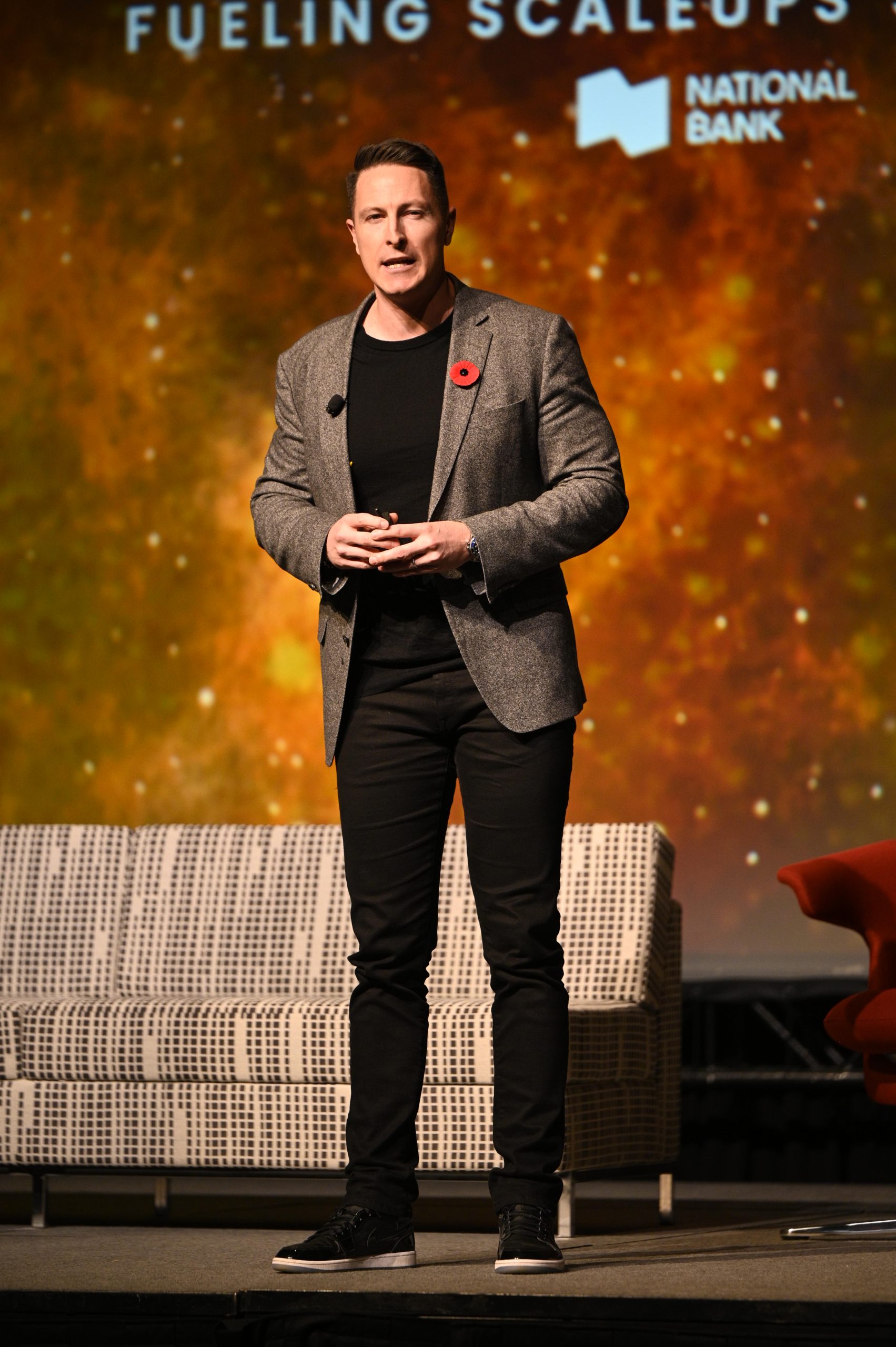
At SAAS NORTH, JD Saint-Martin, President of Lightspeed, offered a candid look at how Lightspeed grew from $75 million in revenue in 2019 to more than $1.2 billion in recurring revenue. As he prepares to step down in March 2026 to mentor and invest in early-stage Canadian founders, the perspective he shared feels less like a tactical update and more like a reflection on what it truly takes to build enduring scale from Canada.
Key takeaways:
- High-performance cultures are shaped by clarity and transparency from day one.
- Sustainable go-to-market execution depends on structured measurement and disciplined cadence.
- AI amplifies existing systems but cannot compensate for disorganized data.
- Aquisitions are the result of long-term relationship building, not opportunistic timing.
- Canada offers structural advantages that founders can deliberately leverage.
Co-Founder/Producer, SAAS NORTH Conference Editor, SAAS NORTH NOW

Apply to Intellectual Property Ontario (IPON) to access trusted IP education, funding, coaching and more.
Pressure As A Gift
JD Saint-Martin began with a story from his time at Nokia in 2007, when the first iPhone launched and its significance was underestimated. The lesson stayed with him.
“There is always a target on your back and actually that’s a good thing. I would encourage for the founders in this room… to foster a healthy dose of paranoia. If you’re feeling pressure today or any day at the office, that’s a gift. Embrace that. If you’re not feeling pressure, odds are you’re not doing the right thing.”
For founders navigating competition and shifting markets, pressure becomes a signal of relevance rather than a sign of fragility.
Culture Before Scale
When JD joined Lightspeed, growth was already in motion. What he focused on was ensuring that expectations matched ambition.
From the first interview, candidates are told clearly that the environment is demanding and fast-moving, with high standards and little room for complacency. That early clarity reduces misalignment later and attracts people who are motivated by intensity rather than surprised by it.
Those expectations extend into performance management.
Quota-carrying reps operate within defined thresholds, including compensation cliffs between 60 and 80 percent of target, and promotions follow a structured points system tied to measurable output.
As JD put it,
“We celebrate epically at Lightspeed, the goal is to have fun while we try to reach for the impossible.”
The culture pairs pressure with recognition, reinforcing momentum rather than diluting it.
Engineering Go-To-Market
Lightspeed’s go-to-market organization now includes roughly 700 quota-carrying team members serving more than 146,000 customers globally. JD described it as a system built around visibility and measurement.
“Every single rep at Lightspeed has an SLA that says, what are your activity metrics? What are your quality metrics and what are your outcome metrics for this role.”
Performance is tracked daily through live dashboards, and leadership meetings focus primarily on diagnosing what is not working and improving it. “You cannot manage what you don’t measure,” he noted.
He also shared a planning discipline that many founders overlook. Lightspeed builds three financial plans: a bull case, a base case, and a bear case. The board reviews the bear case, while internal teams stretch toward the bull. The structure reduces surprise while preserving ambition.

From $1B ARR playbooks to real AI execution, hear directly from leaders building at global scale.
AI As An Amplifier
Rather than speculate about AI’s future, JD shared measurable outcomes.
“70% of all our customer success interactions are now fully solved by an agent. 100% of all our conversations are live translated.”
Outbound efficiency doubled, and sales reps reclaimed roughly eight hours per week previously spent on research. The gains were meaningful, but he was clear about the prerequisite.
“If you want to implement AI, you’re going to go nowhere if you don’t have structured data.”
AI strengthened an existing operating system. It did not replace the need for one.
Looking ahead, he anticipates simplification across sales roles, with the potential for seven distinct functions to collapse into two broader mandates focused on landing customers and expanding relationships.
Building Optionality Early
Before Lightspeed, JD co-founded Chrono Golf, which was later acquired by the company. That outcome, he explained, was the result of sustained engagement rather than opportunistic timing.
“Exits don’t grow on trees. So, if you’re not already on a regular basis, on a weekly or monthly basis having conversations with your potential acquirers, you’re doing something wrong.”
Relationships compound long before transactions materialize.
Building From Canada
As he prepares to shift his focus toward mentoring early-stage founders, JD reflected on the advantages that supported Lightspeed’s trajectory.
Compensation structures paid in Canadian dollars while generating US revenue created capital efficiency. The domestic market provided space to establish traction.
Canada’s multicultural workforce enabled earlier expansion into European and global markets.
“Fear is the beginning of every success I lived. It is absolutely possible to build a OnePlus billion dollar company out of Canada. I can’t wait to see you do the same.”
Why This Matters
What stood out in the room was not just the scale Lightspeed achieved, but the clarity behind how it was achieved.
Culture, measurement, AI adoption and long-term relationship building were described as interconnected elements of a deliberate system.
For founders and operators in attendance, the value lay in hearing an operator unpack the mechanics behind the milestone.
Conversations like this remind us that disciplined execution compounds, and that building global companies from Canada remains difficult but entirely possible.
SAAS NORTH is Canada’s hub for scaling SaaS and AI companies. Founders, teams, and investors come to learn, connect, and grow with the country’s largest in-person tech community.