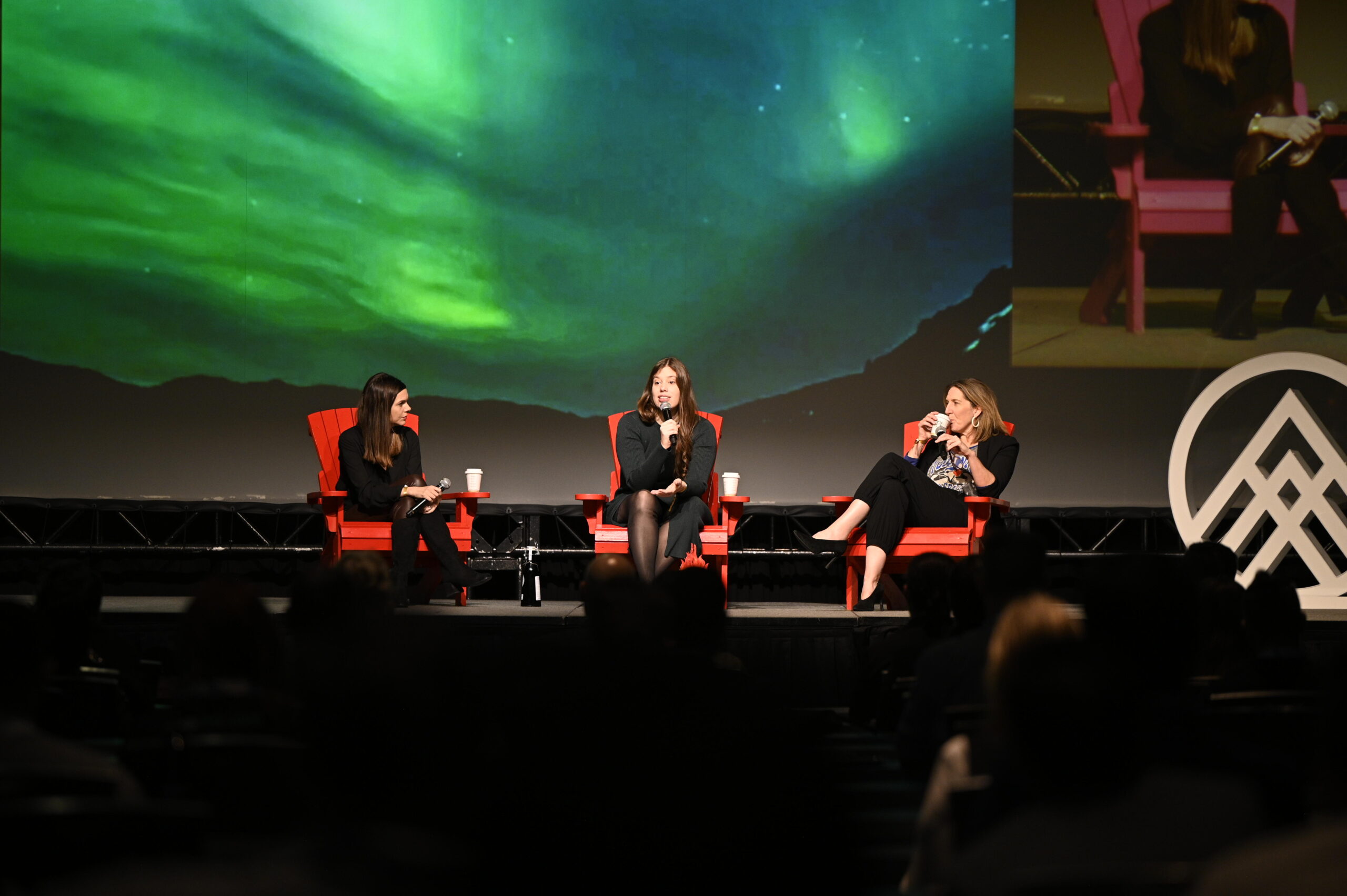


Reinvention In A Hard Market: What Founders Need Most Right Now

Siri Agrell (CEO, BetaKit) Marie Chevrier Schwartz (CEO, TechTO & Peerscale) & Katherine Homuth (Founder, Oomira & SRTX)

SAAS NORTH NOW #102

Hello to Canada’s SaaS and AI Community,

This year has pushed founders into constant adaptation. With market resets, scarce capital, restructuring pressures and changing board expectations, many are re-examining how they define resilience, influence, and success.

Against this backdrop, the SAAS NORTH session Building Beyond Success: Reinvention and the Entrepreneur’s Journey felt especially timely. Moderated by Siri Agrell, CEO of BetaKit, the conversation brought together Marie Chevrier Schwartz (TechTO & Peerscale) and Katherine Homuth (Oomira & SRTX) for one of the most candid, unvarnished discussions of the conference.

Both founders have built, scaled, raised, lost and reinvented themselves and they’re using those experiences to challenge today’s founders to think differently about risk, power, self-protection, and what comes after an entrepreneurial “ending.”

Key takeaways:

  • Founders under-index risk because of fear; surviving the “worst case” opens the door to bigger bets.
  • You must protect yourself contractually, employment terms, equity and basic executive protections are not selfish.
  • Understanding startup math (liquidation preferences, waterfalls, control) is non-negotiable.
  • Losing focus on customers is one of the most common (and costly) pitfalls of raising capital.
  • Failure is far less rare than founders think; transparency and community are the way through it.
  • Entrepreneurs need to reclaim power in an industry that increasingly treats them like “subservient pawns.”

Dave Tyldesley

Co-Founder/Producer, SAAS NORTH Conference Editor, SAAS NORTH NOW

Apply to Intellectual Property Ontario (IPON) to access trusted IP education, funding, coaching and more.

Founders today are navigating a climate where the cost of capital has gone up, board dynamics are shifting, and the psychological load of leadership feels heavier than ever. Marie and Katherine didn’t shy away from any of it.

What followed was a masterclass in honesty and hard-won clarity.

Fear & Why It Holds Founders Back

Marie opened with a reframe: founders often operate from fear instead of possibility.

“I think that if people weren’t scared they’d go harder,” she said. “I think that if you know that no matter what, you’ll be okay, then you just can go a little harder. You could take bigger risks.”

Her point landed because both she and Katherine have lived through the “worst-case scenario”, bankruptcy, loss of control, stepping away from companies they built.

And both are still here, stronger and clearer.

The takeaway for founders? Fear restricts creativity and ambition but surviving failure expands it.

Stop The “Contractual Self-Sacrifice”

One of the session’s biggest themes was how poorly founders protect themselves early in their journey.

Katherine put it bluntly “I think founders need to stop being so afraid to put in what would normally be seen as fairly basic employment protections, but for themself… and to fairly early in their entrepreneurial journey start to see themselves as an executive within the company they founded and to protect themselves.”

She described how founders often sacrifice equity, compensation and decision rights because they fear irritating investors. But that fear compounds, especially when the power dynamics shift.

Her advice to founders raising in 2025: Don’t trade away your own safety. Instead, protect your role, your compensation and your future self.

Connect with our expert Think Ottawa team and access resources to bring your next conference home. Become a Leader.

Understand Startup Math, Or Pay For It Later

The panel agreed that too many founders accept term sheets they don’t fully understand.

Marie was direct; “You’ve got to understand what a liquidation preference means… I don’t think that I had fully internalised what that was.”

Katherine added an analogy that drew laughs (and nods):

“Venture capitalists… literally do this all day every day… My husband talks about trying to beat the squirrel. The squirrel has all day to figure out how to get those seeds out of the bird feeder. The venture capitalist is the squirrel.”

With fundraising activity still sluggish across Canada, understanding leverage, options and consequences is more important than ever.

When Focus Shifts Away From Customers, Everything Breaks

Marie shared one of the deepest lessons from her Sampler journey:

“I think Sampler ultimately lost product-market fit because I wasn’t spending enough time with customers.”

The pressure of board meetings, investor updates and external expectations had pulled her away from what mattered most.

“There’s literally nothing else you should be doing right now than talking to your customers.”

In a year where efficiency, value creation and product-market fit are under a microscope, this reminder is critical for every builder in the ecosystem.

The Loneliest Phase Of The Journey

An unexpected throughline was the emotional toll of leadership, particularly when things go wrong.

Marie recalled the final phase of Sampler “It was the hardest moment of my life… one of the loneliest moments ever.”

Because:

  • You can’t put the burden on employees.
  • You can’t overwhelm your partner.
  • Investors have their own agendas.
  • Your board is in solution mode, not emotional support mode.

This is where community matters. Founder-to-founder relationships matter. As Katherine put it: “The most powerful allies you have in the world as a startup founder are other startup founders.”

Reinvention & The Power Of What Comes Next

Both speakers shared how reinvention fueled their next chapter.

Marie stepped into her role at TechTO and Peerscale with unexpected clarity:

“I took the job to give back, but I’ve ended up receiving far more. The support from this community has been incredible.”

Katherine is in the difficult process of deciding whether to return and reshape SRTX:

“I couldn’t ignore the pull to go back, but now that I’m in it, the old anxiety has returned, sleepless nights and stress all over again.”

Reinvention isn’t romantic. It’s uncomfortable, nonlinear and very human.

But both women made one thing clear: you can rebuild, stronger and wiser.

Join Vancouver’s founders, investors, and M&A experts for practical exit playbooks. Early Bird pricing available now.

A Call To Founders: Reclaim Your Leadership

Katherine ended the session with a challenge to the room:

“It is not for the venture capitalists, it’s not for funders, it’s for the founders, the builders. The leaders… let’s start running the industry again.”

And Marie added the rallying cry every founder needs right now “Dare. Do it. Do it for yourself and dare.”


SAAS NORTH is Canada’s hub for scaling SaaS and AI companies. Founders, teams, and investors come to learn, connect, and grow with the country’s largest in-person tech community.

Subscribe to hear the latest news about our 2026 conference!

Hello to Canada’s SaaS and AI Community,

This year has pushed founders into constant adaptation. With market resets, scarce capital, restructuring pressures and changing board expectations, many are re-examining how they define resilience, influence, and success.

Against this backdrop, the SAAS NORTH session Building Beyond Success: Reinvention and the Entrepreneur’s Journey felt especially timely. Moderated by Siri Agrell, CEO of BetaKit, the conversation brought together Marie Chevrier Schwartz (TechTO & Peerscale) and Katherine Homuth (Oomira & SRTX) for one of the most candid, unvarnished discussions of the conference.

Both founders have built, scaled, raised, lost and reinvented themselves and they’re using those experiences to challenge today’s founders to think differently about risk, power, self-protection, and what comes after an entrepreneurial “ending.”

Key takeaways:

  • Founders under-index risk because of fear; surviving the “worst case” opens the door to bigger bets.
  • You must protect yourself contractually, employment terms, equity and basic executive protections are not selfish.
  • Understanding startup math (liquidation preferences, waterfalls, control) is non-negotiable.
  • Losing focus on customers is one of the most common (and costly) pitfalls of raising capital.
  • Failure is far less rare than founders think; transparency and community are the way through it.
  • Entrepreneurs need to reclaim power in an industry that increasingly treats them like “subservient pawns.”

Founders today are navigating a climate where the cost of capital has gone up, board dynamics are shifting, and the psychological load of leadership feels heavier than ever. Marie and Katherine didn’t shy away from any of it.

What followed was a masterclass in honesty and hard-won clarity.

Fear & Why It Holds Founders Back

Marie opened with a reframe: founders often operate from fear instead of possibility.

“I think that if people weren't scared they'd go harder,” she said. “I think that if you know that no matter what, you'll be okay, then you just can go a little harder. You could take bigger risks.”

Her point landed because both she and Katherine have lived through the “worst-case scenario”, bankruptcy, loss of control, stepping away from companies they built.

And both are still here, stronger and clearer.

The takeaway for founders? Fear restricts creativity and ambition but surviving failure expands it.

Stop The “Contractual Self-Sacrifice”

One of the session’s biggest themes was how poorly founders protect themselves early in their journey.

Katherine put it bluntly “I think founders need to stop being so afraid to put in what would normally be seen as fairly basic employment protections, but for themself… and to fairly early in their entrepreneurial journey start to see themselves as an executive within the company they founded and to protect themselves.”

She described how founders often sacrifice equity, compensation and decision rights because they fear irritating investors. But that fear compounds, especially when the power dynamics shift.

Her advice to founders raising in 2025: Don’t trade away your own safety. Instead, protect your role, your compensation and your future self.

Understand Startup Math, Or Pay For It Later

The panel agreed that too many founders accept term sheets they don’t fully understand.

Marie was direct; “You’ve got to understand what a liquidation preference means… I don't think that I had fully internalised what that was.”

Katherine added an analogy that drew laughs (and nods):

“Venture capitalists… literally do this all day every day… My husband talks about trying to beat the squirrel. The squirrel has all day to figure out how to get those seeds out of the bird feeder. The venture capitalist is the squirrel.”

With fundraising activity still sluggish across Canada, understanding leverage, options and consequences is more important than ever.

When Focus Shifts Away From Customers, Everything Breaks

Marie shared one of the deepest lessons from her Sampler journey:

“I think Sampler ultimately lost product-market fit because I wasn’t spending enough time with customers.”

The pressure of board meetings, investor updates and external expectations had pulled her away from what mattered most.

“There’s literally nothing else you should be doing right now than talking to your customers.”

In a year where efficiency, value creation and product-market fit are under a microscope, this reminder is critical for every builder in the ecosystem.

The Loneliest Phase Of The Journey

An unexpected throughline was the emotional toll of leadership, particularly when things go wrong.

Marie recalled the final phase of Sampler “It was the hardest moment of my life… one of the loneliest moments ever.”

Because:

  • You can’t put the burden on employees.
  • You can’t overwhelm your partner.
  • Investors have their own agendas.
  • Your board is in solution mode, not emotional support mode.

This is where community matters. Founder-to-founder relationships matter. As Katherine put it: “The most powerful allies you have in the world as a startup founder are other startup founders.”

Reinvention & The Power Of What Comes Next

Both speakers shared how reinvention fueled their next chapter.

Marie stepped into her role at TechTO and Peerscale with unexpected clarity:

“I took the job to give back, but I’ve ended up receiving far more. The support from this community has been incredible.”

Katherine is in the difficult process of deciding whether to return and reshape SRTX:

“I couldn’t ignore the pull to go back, but now that I’m in it, the old anxiety has returned, sleepless nights and stress all over again.”

Reinvention isn’t romantic. It’s uncomfortable, nonlinear and very human.

But both women made one thing clear: you can rebuild, stronger and wiser.

A Call To Founders: Reclaim Your Leadership

Katherine ended the session with a challenge to the room:

“It is not for the venture capitalists, it's not for funders, it's for the founders, the builders. The leaders… let's start running the industry again.”

And Marie added the rallying cry every founder needs right now “Dare. Do it. Do it for yourself and dare.”


SAAS NORTH is Canada’s hub for scaling SaaS and AI companies. Founders, teams, and investors come to learn, connect, and grow with the country’s largest in-person tech community.