
Hello to Canada’s SaaS and AI Community,
AI is helping users reach value faster, while making product-led growth more expensive, pricing less straightforward and differentiation harder to defend.
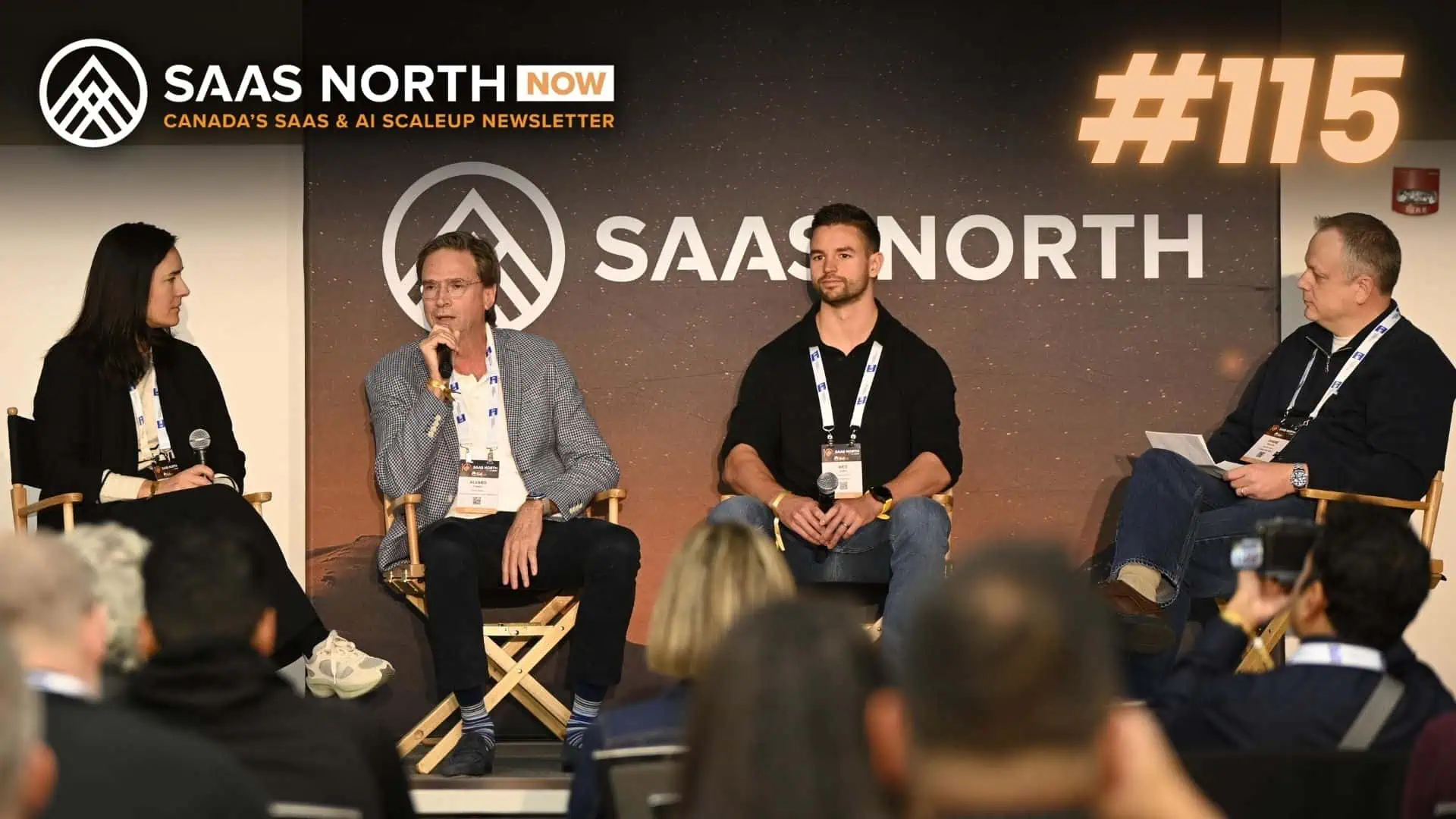
During a recent SAAS NORTH discussion moderated by Shane McLean of LaBarge Weinstein, Wes Bush of ProductLed, Monique Moran of Growth Assembly and Alvaro Pombo of TrueContext explored what happens when AI becomes part of the PLG model.
Months later, those questions are becoming harder for SaaS companies to avoid.
Key takeaways:
- Users increasingly expect immediate value.
- Free product experiences now carry real costs.
- AI is weakening the link between seats and value.
Co-Founder/Producer, SAAS NORTH Conference Editor, SAAS NORTH NOW

Faster Value Changes The Economics
For years, product-led companies focused on making software easier to use by removing steps, simplifying interfaces and guiding customers through the product.
Wes argued that AI changes the expectation entirely.
“The expectation is I want it now, and I want to get that value as fast as possible.”
Users increasingly expect a product to understand what they are trying to achieve, complete some of the setup and move them directly toward a useful outcome.
That faster path to value, however, is no longer cheap.
Wes shared the example of an AI presentation product. One model cost around 17 cents each time a free user created a presentation, while a more advanced model cost several dollars.
At 25,000 free users each week, that difference becomes a significant business decision.
The strongest version of a product may also be the most expensive one to give away, which is why Wes pointed to reverse trials as one possible response. Users experience the full product for a limited period before moving onto a more restricted free plan unless they upgrade.
The wider lesson is that SaaS companies need to understand what activation costs, which actions lead to conversion and how much free usage they can afford to support.
Strong acquisition means little if every new user increases costs without creating a clear path to revenue.

Seat-Based Pricing Is Under Pressure
The traditional relationship between users and value is also becoming less direct.
One employee may now complete work that previously required several people, while an AI agent may perform tasks without fitting neatly into the definition of a user.
As Wes explained:
“You’re going to see a lot of pricing models change if you are a product-led company because you can’t just do per-user pricing. But is usage-based the right model?”
That final question matters.
Usage-based pricing offers one possible answer, but it creates its own challenges. Should customers pay for tokens, tasks, workflows or completed outcomes? Can the model remain understandable for buyers while protecting the company’s margins?
The issue is particularly difficult for established SaaS companies with customers already on significant contracts.
Alvaro pointed to the tension between the strong economics of the old model and new AI capabilities that may create more value, but also cost more to provide.
“You have great margins in the old model. What are the margins going to be with this model?”
For companies with an existing customer base, this is not simply a question of choosing a new price. It means introducing a different value and cost structure alongside contracts that may have been designed years earlier.
Platform pricing may suit enterprise customers. Usage-based models may work where consumption closely reflects value. Other companies may combine subscriptions, product tiers and AI add-ons.
Alvaro suggested the likely destination is a blended approach rather than a single model applied across every customer and use case.
When AI changes how a product is used, what it costs to deliver and where customers receive value, the commercial model needs to move with it.

Product-Led Does Not Mean Sales-Free
AI may help enterprise buyers experience value more quickly, but it cannot remove procurement, security reviews, legal teams or the other steps involved in a major software purchase.
Alvaro noted that enterprise customers may test a product at speed while the full buying process still moves through a much longer queue.
This gives PLG a more specific role.
The product can prove that a solution works, build internal support and create a stronger business case. Sales can then help move the organization from early usage to a larger agreement.
For some companies, that may mean offering a paid proof-of-value engagement, giving customers enough access to demonstrate a result without requiring an immediate full rollout.
The aim is not to bypass the buying process. It is to enter it with evidence.
AI Is Not The Moat
As advanced AI models become easier to access, adding a feature on top of one is unlikely to create lasting differentiation.
Shane framed the risk directly:
“What happens when the model just tweaks the model and erases the need for you? So how do you create a moat?”
Monique argued that the answer lies in getting closer to the customer’s use case and the outcome the product creates.
“Get really tight on the use cases and the outcomes that you’re creating so that you know what data is valuable and then find a way to enrich it and make it proprietary.”
The moat may be proprietary data, the depth of the workflow, customer relationships or the product’s understanding of a specific problem.
Access to the same model does not mean access to the same customer context, relationships or accumulated product knowledge. That is where stronger defensibility can emerge.
The useful test is whether the product learns something through customer usage that a competitor would not know, and whether that knowledge creates a meaningfully better experience.
AI can make a product faster and more capable. It cannot remove the need to build something customers would struggle to replace.

Start With The Friction
Monique also suggested beginning with the problem rather than the technology.
Where is the team losing time? Where does onboarding slow down? At what point does conversion drop? Which part of the customer journey creates the most frustration?
Only then should the company decide where AI belongs.
The highest-impact use may not be the most visible feature. It could be a faster internal workflow, better onboarding or a more personalized path to value.
The question is not whether the product has enough AI. It is whether AI helps the customer get where they were already trying to go.
Why This Conversation Matters
AI strengthens many of the ideas that made product-led growth compelling, but it also introduces costs and complexities the traditional PLG model was never designed around.
The relationship between users and value is becoming less direct, enterprise adoption still depends on human support and access to the same underlying models does little to create lasting differentiation.
The opportunity is not to abandon PLG, but to rebuild it around faster value, clearer economics, more flexible pricing and a defined role for product, sales and customer success.
SAAS NORTH is Canada’s hub for scaling AI-SaaS companies. Founders, teams and investors come to learn, connect and grow with the country’s largest in-person tech community.