
Hello to Canada’s SaaS and AI Community,
Inside many companies, AI hasn’t arrived all at once. It has been showing up in small ways, a tool here, a workflow there, gradually finding its place inside day-to-day work.
What follows is rarely a clean transformation. It tends to expose how systems are structured, how decisions are made and how teams actually operate.
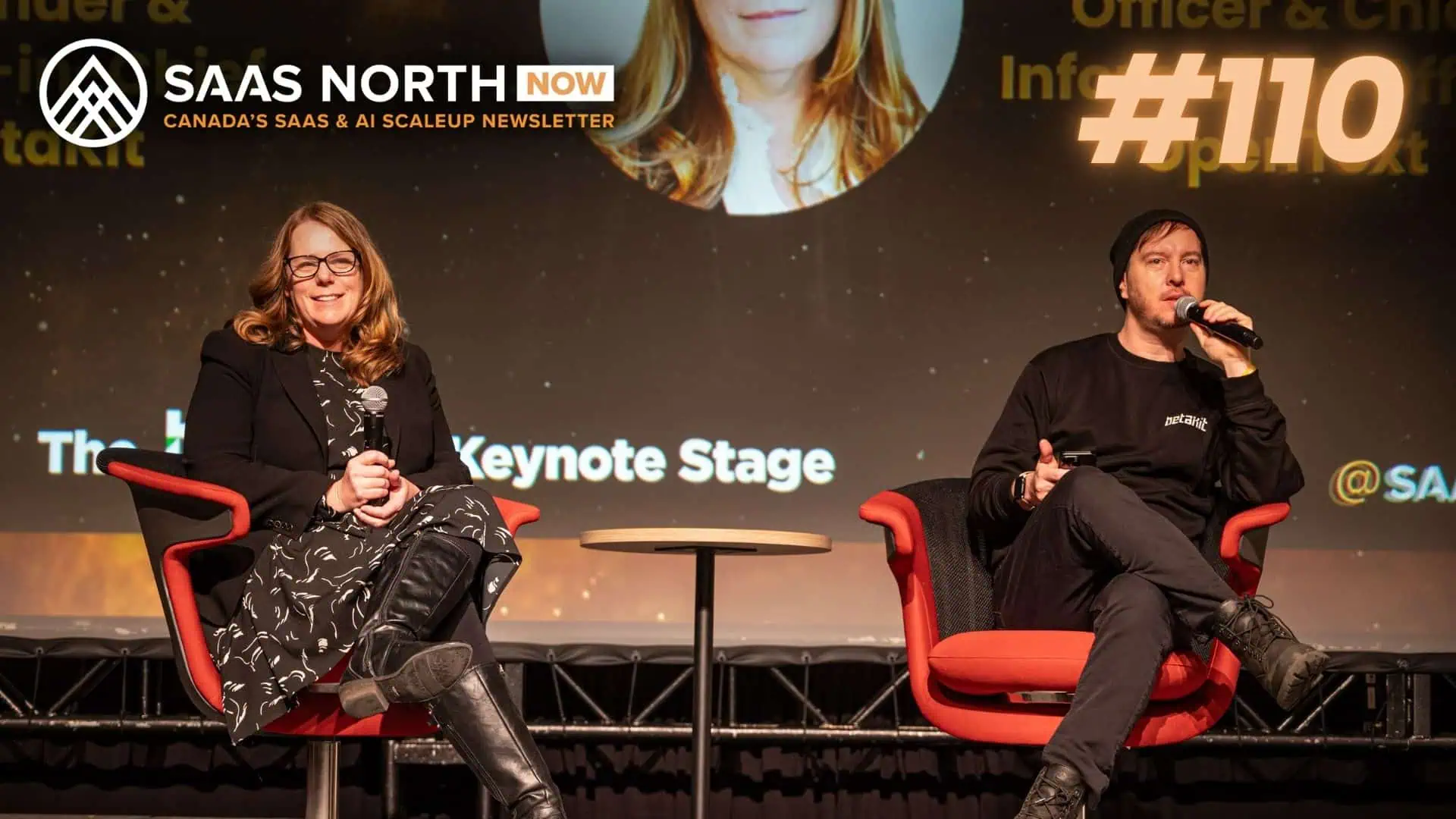
At SAAS NORTH, Shannon Bell, Chief Digital Officer and CIO at OpenText, shared what that process looks like at scale across a 22,000-person organization.
In the months since that conversation, OpenText has also made broader organizational changes, a reminder that shifts like these rarely happen in isolation and often unfold alongside wider restructuring.
Her perspective offers a useful lens into how AI is being integrated, not in theory, but in practice.
Key takeaways:
- AI adoption works best when tied to specific business outcomes
- Simplifying systems and data often comes before meaningful AI deployment
- Adoption depends on how clearly teams understand where AI fits into their work
- AI reshapes how work is structured, not just how it is executed
Co-Founder/Producer, SAAS NORTH Conference Editor, SAAS NORTH NOW

Start With The Work, Not The Technology
As AI gained momentum, many companies moved quickly to test tools and deploy new capabilities.
OpenText approached the shift more deliberately.
“We didn’t run really fast in the first instance,” Shannon explained, focusing first on understanding the problems they were trying to solve and whether their systems were ready to support that work.
At the time, the organization was operating with more than 1,600 applications and over 100 data centres alongside its cloud infrastructure. Simplifying that environment became the first priority.
“Clean the house, figure out where our data is, figure out our processes, simplify, get onto one set of systems.”
That work created the conditions for everything that followed.
Why Adoption Becomes A People Question
Even with the right systems in place, the challenge did not center on technology.
“It’s never a technical problem. It’s a people and change management problem.”
As tools were consolidated and new systems introduced, teams had to adjust to different ways of working. Familiar tools were replaced, processes evolved and questions about roles naturally followed.
Early attempts to make AI widely available without clear guidance did not lead to meaningful adoption.
What made a difference was context.
Instead of broad rollouts, AI was introduced gradually, tied to specific roles and use cases. Teams could see how it applied to their work, which made it easier to engage with and build confidence over time.

When Work Starts To Shift
Some of the most visible changes emerged in service management.
After consolidating systems, OpenText reduced L1 support roles by 30 percent. With AI layered on top, that reduction reached 70 percent.
The shift was not only about efficiency. It also changed how work was distributed across the organization.
Routine tasks became automated, while new responsibilities emerged around managing exceptions, refining processes and overseeing how systems performed. Some roles naturally phased out as processes evolved, while others expanded in scope and complexity.
Work began shifting toward areas that require more judgment and coordination.
Treating AI As Part Of The Team
As these changes took hold, OpenText began to formalize how AI fit within the organization.
For each agent they developed, they created a job description.
This made expectations clear, defining what each system was responsible for, how it would operate and how success would be measured.
It also shaped how systems were designed.
More complex, all-encompassing agents proved difficult to manage. Narrower, well-defined responsibilities led to more reliable outcomes and made it easier to coordinate work across systems.
Over time, this created a model where teams manage a combination of human and digital contributors.
“We kind of joke that they should be called human and digital resource management, not just HR.”

Measuring Progress With Intention
As AI became more embedded, measuring its impact required a different level of clarity.
Requests for new tools were not enough on their own. Each initiative needed a clear understanding of what it was expected to change.
OpenText approached this by establishing baselines before introducing AI and measuring results against those starting points.
“If you’re rolling a tool to your sales team… understanding that baseline and then being able to understand what you’re going to attribute to AI is critical.”
This made it possible to connect adoption directly to outcomes rather than activity.
A Broader Opportunity
Beyond the organization, the shift points to a wider opportunity.
Many of the roles most affected by AI have historically been outsourced or structured around repetitive processes. As those tasks become automated, new roles are emerging around managing, refining and improving these systems.
“The opportunity for Canada is really to invest in enabling enterprise… to train the AI capabilities for their enterprise… and build out that skillset that is managing AI.”
The question becomes less about replacing work and more about how that work evolves.
Why This Conversation Matters
What stands out in Shannon’s perspective is how grounded it feels in the realities of operating a company at scale.
The impact of AI is shaped less by the technology itself and more by how it connects to systems, decisions and people.
As adoption continues, those underlying choices are becoming more visible.
SAAS NORTH is Canada’s hub for scaling AI-SAAS companies. Founders, teams and investors come to learn, connect and grow with the country’s largest in-person tech community.