
Hello to Canada’s SaaS and AI Community,
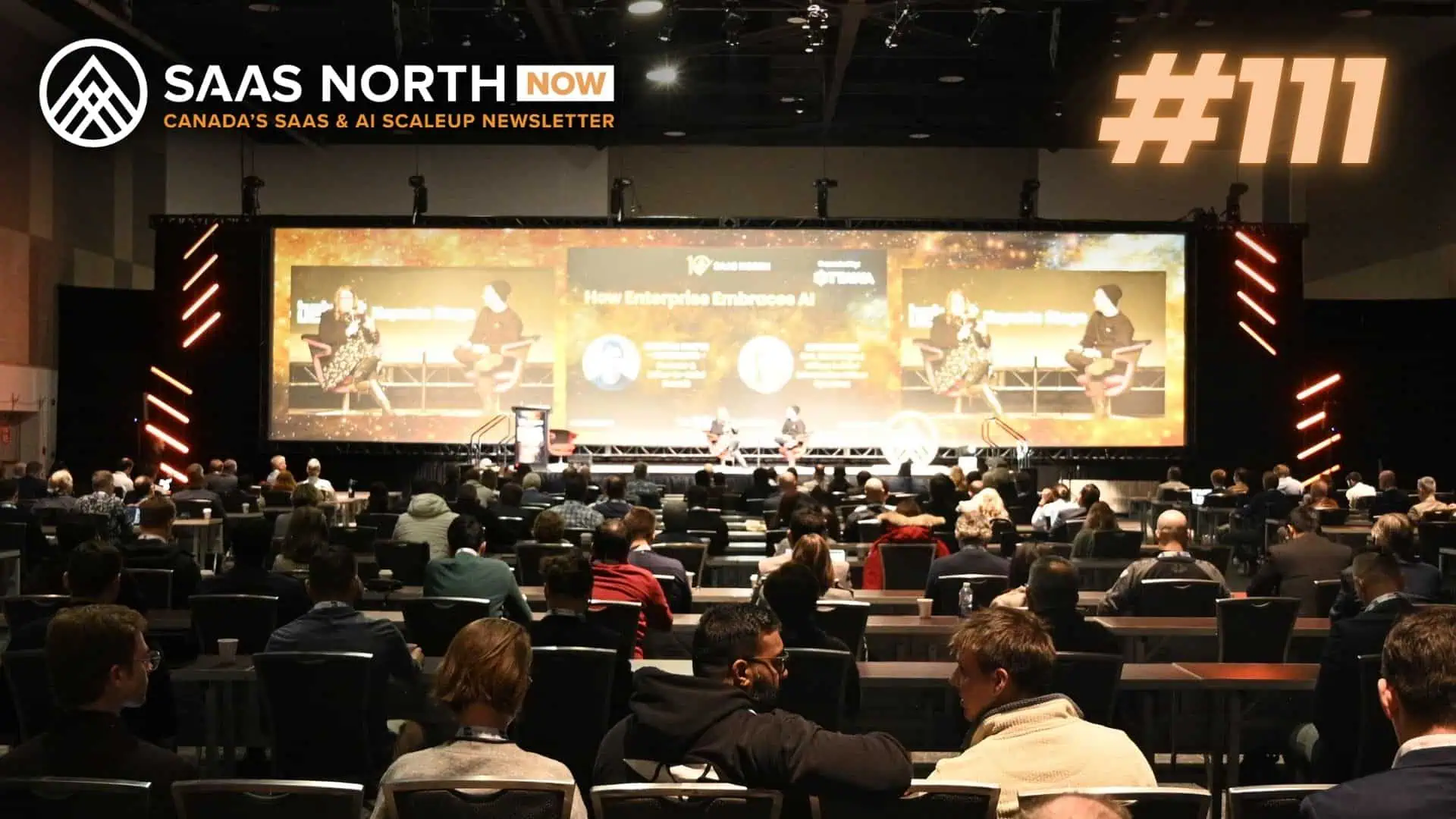
The best ideas in SaaS often take shape through conversation, on stage, between sessions and in the moments where operators compare what they are seeing in real time.
Across those discussions, a consistent pattern has started to emerge.
Founders are rethinking what SaaS becomes when AI is embedded into the product, while operators are watching the economics shift in ways that no longer follow traditional models.
Taken together, it feels less like a trend and more like a structural change already underway.
Key takeaways:
- SaaS is evolving into AI-first products rather than being replaced outright
- Cost structures are compressing quickly while new constraints emerge around tokens and compute
- Smaller teams are reaching levels of output that previously required significantly more headcount
- Proprietary data is becoming one of the few durable sources of advantage
Co-Founder/Producer, SAAS NORTH Conference Editor, SAAS NORTH NOW

SaaS Is Not Being Replaced
Jason Smith, CEO at Klue, framed the shift in a way that cuts through much of the noise.
“It’s not a boxing match. It’s an evolution.”
The conversation is often framed as SaaS versus AI, as though one replaces the other.
In practice, what is happening is more gradual.
Software is being rebuilt with AI embedded into how it works and how it delivers value. The problem the product solves remains the same but the way it solves it begins to change.
That shift introduces a new kind of dependency.
“You’ve got a pet tiger. At any moment it could eat you.”
Foundation models continue to improve, which benefits every company building on top of them. At the same time, they concentrate power in ways that are difficult to ignore.

The Economics Are Already Changing
In a separate discussion, Liam Martin, Co-Founder at Time Doctor, described what he’s seeing across a portfolio of companies and operators building with AI at the core.
The shift shows up most clearly in how software is priced and how costs behave underneath the surface.
Operators are starting to question how long traditional seat-based models can hold when the amount of work done by each user continues to expand.
At the same time, the cost of building has dropped sharply.
“I feel like we’re doing stuff that would have cost tens of millions of dollars last year for hundreds of thousands today.”
The barrier to building software has collapsed but that doesn’t mean the economics have become simpler.
“A company doing tens of millions in ARR is basically spending the same amount in token costs. They’re just washing tokens.”
Revenue grows but margins behave differently. The cost of delivering the product becomes more directly tied to usage and compute.
Smaller Teams, Larger Output
One of the clearest shifts Liam pointed to is how much output a small team can now generate.
“We just bought a business from a 23 and 26 year old. Around $600K ARR, now over $1M, run by one person.”
The metric that stands out is no longer headcount growth but revenue per employee.
“The big metric is revenue per employee. It’s probably around $2M.”
In another example, a small team was operating across multiple businesses at once.
“Three people running a portfolio of six companies. Probably never bigger than ten.”
AI is not simply making teams more efficient. It’s changing how much one person can realistically own and operate.
At the same time, adoption within teams is uneven.
“10 to 20 out of 200 people are truly AI-first.”
The gap between those who fully integrate AI into their workflows and those who do not continues to widen.

Cost Compression Comes With Tradeoffs
The speed at which costs are compressing is changing how companies think about building.
“An MCP server that would have cost $200,000 two years ago… I can now do in an afternoon.” Liam said.
Capabilities that once required meaningful capital investment can now be replicated quickly, often with far fewer people.
Even established SaaS pricing models are being challenged.
Tools that once justified significant subscription costs can increasingly be rebuilt internally or replaced with AI-native workflows at a fraction of the price.
The question shifts from what the software does to where the value actually sits.
The Moat Question Is Getting Clearer
As building becomes easier and distribution accelerates, differentiation becomes harder to sustain at the product level alone.
“If you can have some kind of degree of proprietary data, you got a moat,” said Jason.
Data that compounds over time begins to matter more than features that can be replicated quickly.
At the same time, that advantage sits on top of infrastructure that remains highly concentrated.
“There are basically three corporations on the planet that can supply you tokens. Why would they change pricing?” added Liam.

Why This Conversation Matters
What these conversations surface isn’t a single shift but several happening at once.
SaaS is becoming more embedded, more automated and more closely tied to outcomes.
Costs are compressing in some areas while emerging in others.
Teams are becoming smaller in structure but more capable in output and underneath it all, the question of what creates lasting advantage is becoming more important.
SAAS NORTH exists to surface these kinds of conversations by bringing together the operators navigating these changes in real time because for many founders, the challenge is no longer whether the model is changing.
It is how quickly they can adapt alongside it.