
Hello to Canada’s SaaS and AI Community,
Across boardrooms and product meetings, the conversation around software has been changing.
Teams can build faster than ever but speed hasn’t made the business of software easier and as budgets tighten a harder question keeps surfacing: what did this software accomplish?
For years, SaaS growth followed a simple equation: more people meant more seats, more licences, more revenue. Now, as AI begins to absorb work that once required teams, that relationship is starting to break.
You can already see it in the market. Salesforce is moving beyond seat-based pricing with Agentforce. ServiceNow is gaining momentum by owning the workflows beneath the interface and Intercom has aligned pricing directly to resolved outcomes.
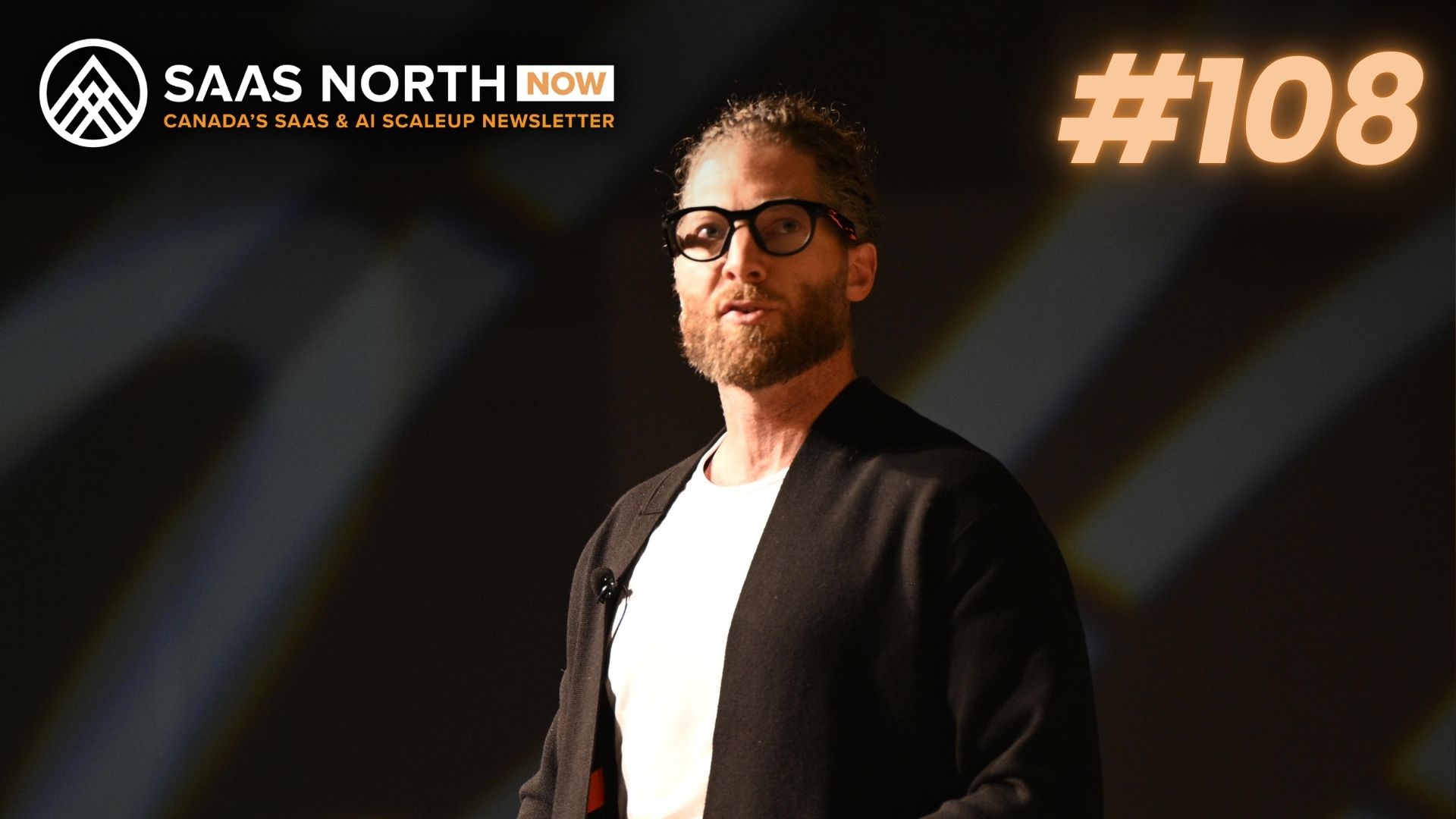
At SAAS NORTH, Michael Litt, Co-Founder of Vidyard and Garage Capital, put a name to this shift. Software is moving from access to outcomes.
Now, that idea feels less like speculation and more like truth.
Key takeaways:
- Customers increasingly expect measurable outcomes rather than software access.
- AI is enabling products to complete work that once required human intervention.
- Pricing models are shifting toward consumption and performance rather than seats.
- Canadian founders have an opportunity to build companies that replace workflows, not just support them.

When Software Becomes A Commodity
Part of the pressure comes from the sheer number of companies now competing for the same budgets.
When Vidyard began, Michael recalled feeling overwhelmed by the competitive landscape in marketing technology. Even then, dozens of companies were fighting for the same CMO budget.
Today the scale of the category looks very different.
“There’s rumoured to be somewhere north of 250,000 companies in the MarTech landscape in less than 15 years,” Michael explained. “And there’s no way that budgets grew at the same speed as the number of companies.”
That observation came before the latest wave of AI tools accelerated product creation again. The number of products has increased but budgets have not.
Lower barriers to building software have created enormous innovation but they have also created saturation. In many categories, dozens of tools promise to solve nearly identical problems.
“You just cannot compete with that many companies and a finite budget.”

The Hangover From The SaaS Boom
During the pandemic years, companies adopted software quickly and often enthusiastically. New tools appeared across every department as organizations chased efficiency and growth.
The environment that followed has been very different.
Companies have begun reviewing their software portfolios more carefully, eliminating unused licences and consolidating overlapping tools. Michael described the moment as a kind of industry hangover.
Finance leaders are asking tougher questions about return on investment and renewal conversations increasingly revolve around measurable impact.
Many companies are discovering they have accumulated far more software than they truly need.
What Buyers Are Actually Asking For
Against that backdrop, Michael pointed to a shift that may reshape how software companies think about value.
“Customers do not want seats. They want results.”
The preference for outcome-based pricing has grown steadily. Instead of paying for access to a tool, many buyers now want to pay for the work that tool completes.
This is the idea Michael describes as Results-as-a-Service, or RaaS.
“RaaS is results as a service,” he said. “This is the era of software being able to do the work.”
Where SaaS democratized access to software, the next phase may focus on democratizing successful outcomes.

When Software Performs The Job
This shift was already underway before agentic AI but it’s accelerated rapidly as capabilities improve.
Software is moving beyond assisting users toward completing tasks on their behalf. In some cases, entire workflows are now handled without human involvement.
Michael shared the story of a company that set out to build logistics software, only to realize the system they were creating could run the operation itself.
Instead of selling software into the industry, they became the operator.
“We’re not building software,” he said. “We’re replacing jobs.”
The boundary between software and service is becoming increasingly difficult to distinguish.
Why Outcome-Driven Companies Scale Faster
Companies built around outcome delivery often scale differently from traditional SaaS businesses.
When value is tied directly to completed work, the return on investment becomes easier for buyers to understand. Pricing can align with economic impact rather than software usage.
That clarity often accelerates adoption.
“SaaS sold access,” Michael explained. “RaaS sells certainty.”
For many organizations, certainty about results has become far more valuable than access to another tool.

A Moment For Canadian Builders
For Michael, the shift carries particular implications for Canada’s technology ecosystem.
Canadian companies have long excelled at technical research and product innovation. The challenge has often been capturing the full commercial opportunity that follows.
“Canada generally does the research, but gives away the commercialization,” Michael said. “And I fundamentally want to change that.”
As software begins to automate entire workflows, founders have the opportunity to rethink how companies are built from the start.
Rather than building tools that assist industries, they increasingly build systems that perform the work those industries depend on.
Why This Conversation Matters Now
Several months after Michael’s keynote, the patterns he described are becoming easier to see.
Across sales, customer support, logistics and operations, products are beginning to automate entire workflows rather than simply providing dashboards or tools.
Yet the fundamentals of building great companies remain unchanged. Teams still need to identify meaningful problems, design systems that deliver reliable outcomes and earn trust with customers over time.
SAAS NORTH exists to surface these conversations by bringing founders and operators together to share how they are navigating shifts like this one.
Because as the industry evolves, the question facing every software company becomes harder to avoid.
Are we still selling software, or are we delivering results?
SAAS NORTH is Canada’s hub for scaling SaaS and AI companies. Founders, teams, and investors come to learn, connect, and grow with the country’s largest in-person tech community.